
Manufacturing & Quality Review
Connect each capability claim with the relevant factory, process and record.
Define acceptance before checking the product
The accepted drawing, configuration list and sample establish the glass, finish, lighting, controls, mounting, accessories and packaging to inspect. The inspection plan then records each check, its conditions, acceptance criteria and how exceptions are handled.
The recorded lighting-check example
The supplied cabinet-production presentation describes surface/function checks and a four-hour lighting/ageing check for the programme shown. This is a documented process example. The applicable duration and conditions for a new order belong in that order’s inspection plan; this example is not a reliability-life result.
Production inspection and certification serve different purposes
Dimensional, appearance and function checks help assess the manufactured assembly against its accepted baseline. Certification files require a separate check of the named entity, covered model/configuration, factory and destination scope. Keep the corresponding production and certification records distinct.
Release, traceability and repeat-order changes
Before packing, reconcile inspection disposition, product identity, accessories, labels and packaging revision. Keep the model/batch reference with the release record. A changed component, finish, factory or pack should be reviewed against the accepted baseline before a repeat order carries its earlier approval forward.
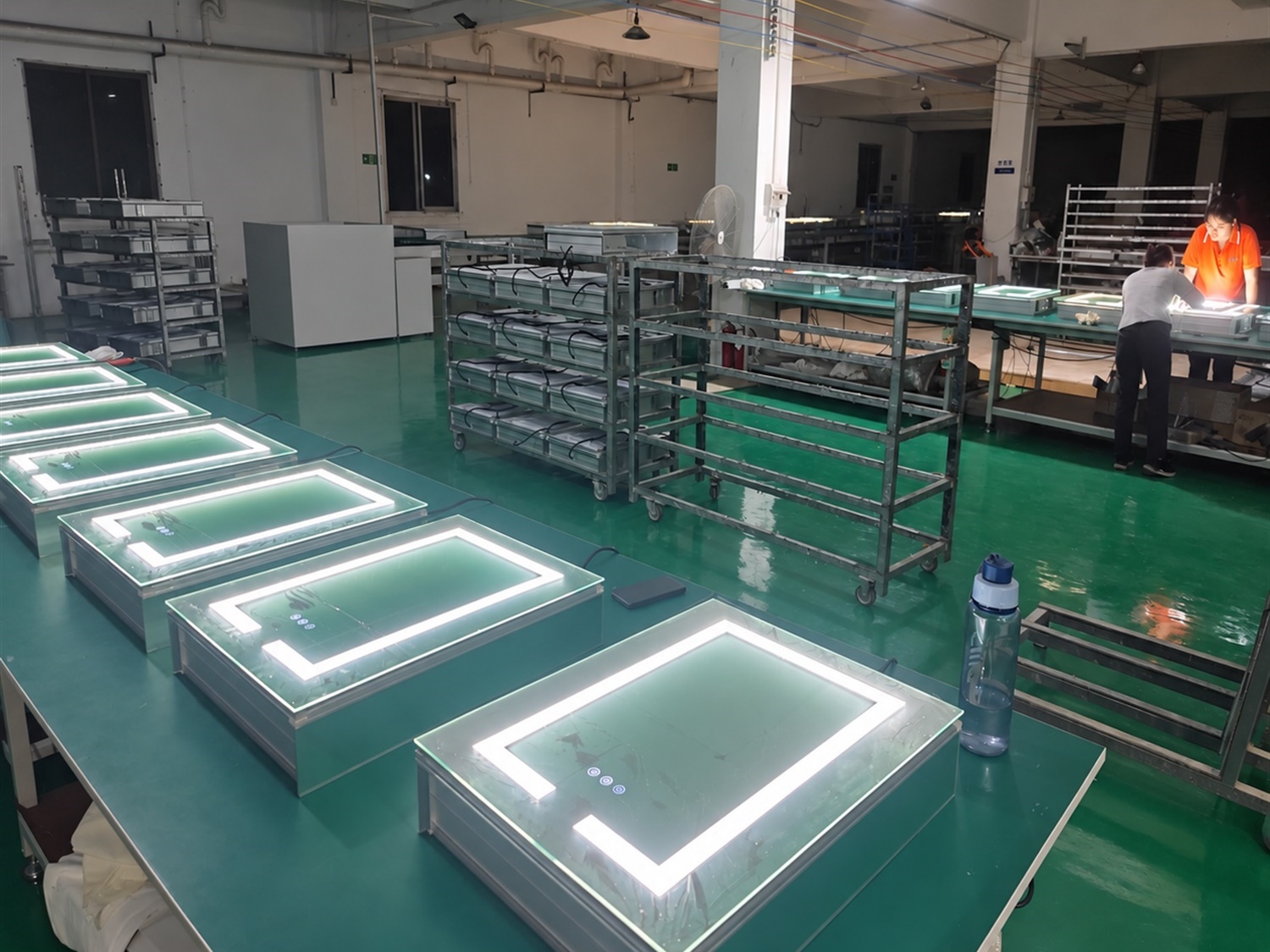
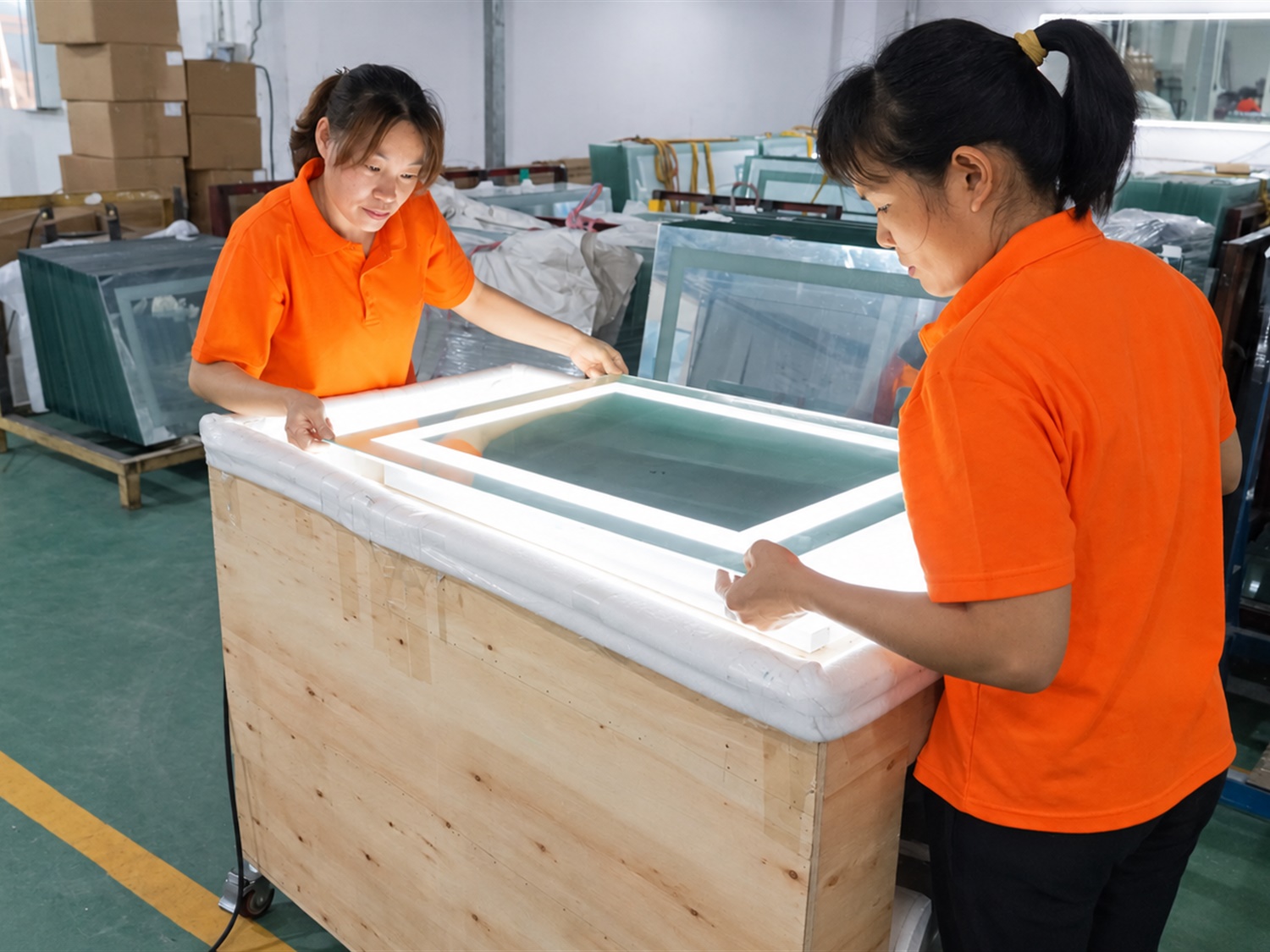
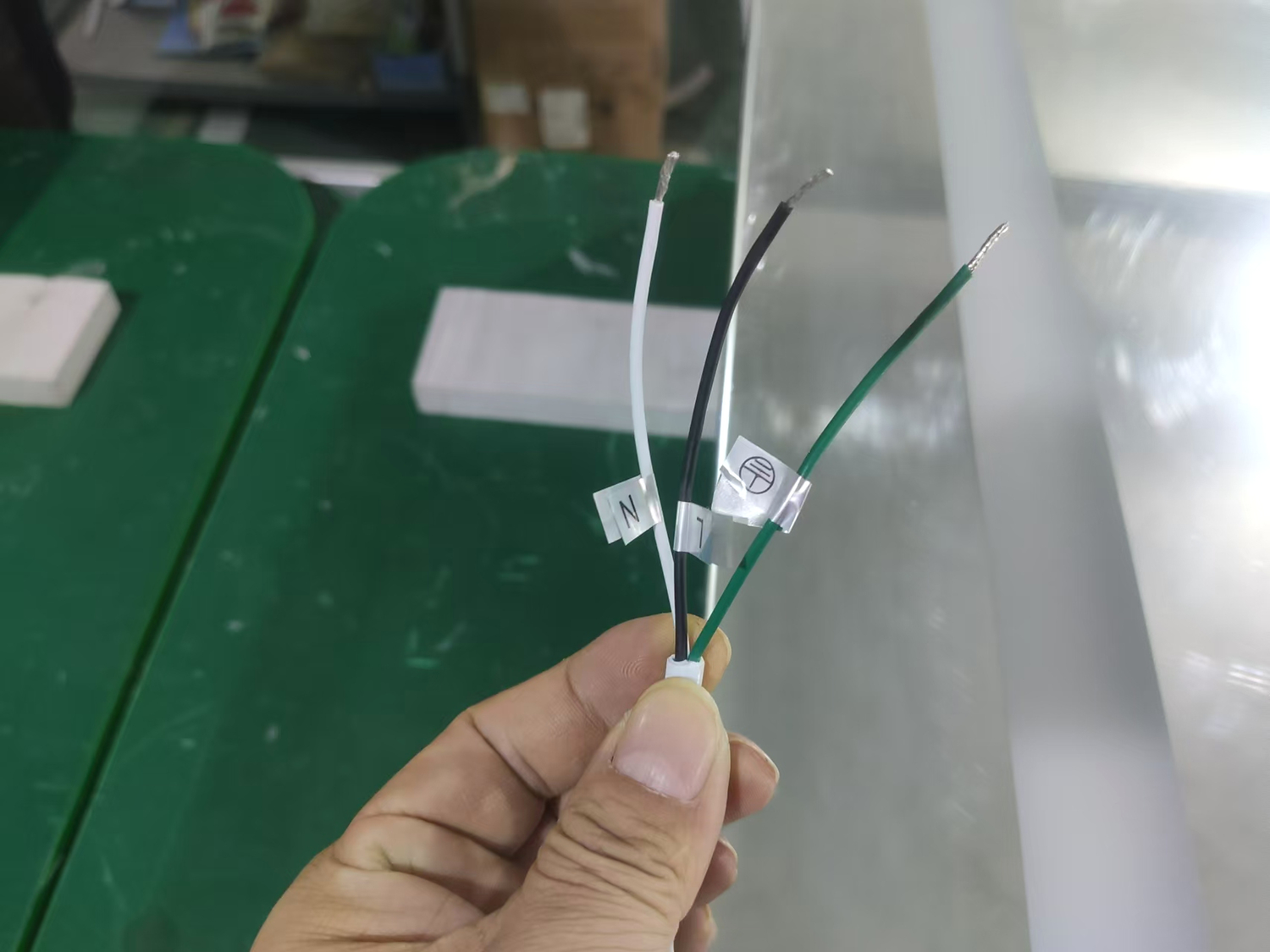
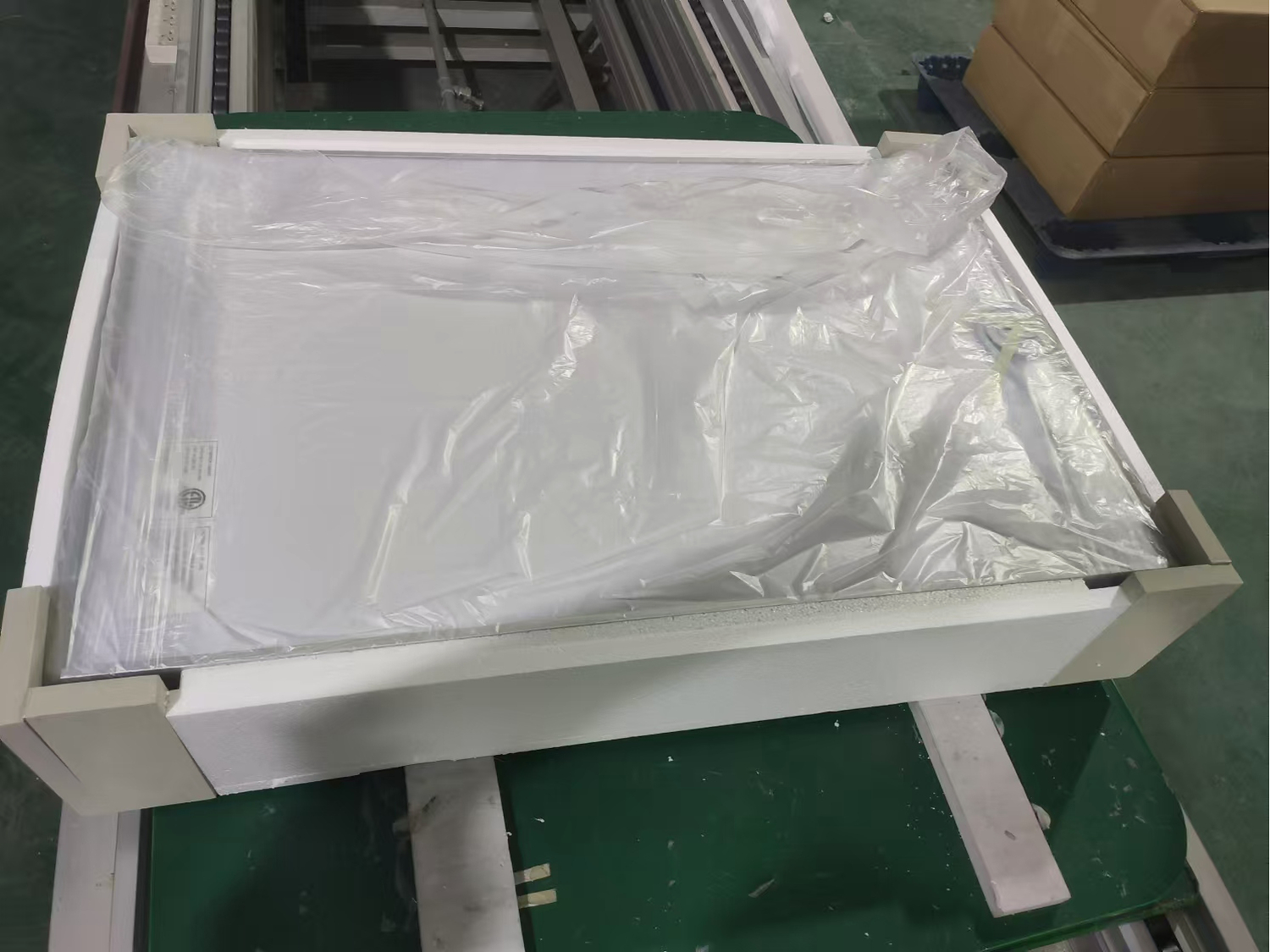
Quality review by stage
| Stage | Object | What to define | Supporting record |
|---|---|---|---|
| Before assembly | Glass/frame/body and bought-in electrical parts | Accepted specification, identification and visible-condition checks | Material/part identity and deviation disposition |
| During assembly | Light area, fixings, hinges, shelves and electrical layout | Dimensions/fit, surface, access and function against the sample | In-process checks tied to the drawing/BOM |
| Function / lighting | Selected switching, CCT/dimming and other ordered functions | Agreed function checks and applicable electrical test plan | Conditions and results for the chosen assembly |
| Before packing | Appearance, accessory set, labels and product identity | Inspection disposition against agreed acceptance criteria | Release record and traceable model/batch references |
| Change / reorder | Substitution or revision to parts, finish, factory or packaging | Review consequences for sample, documents and validation | Recorded approval of the changed baseline |
Factory and process
- Manufacturing location. Identify the actual manufacturing location and sales destination with the selected product. Review the relevant process and document scope before accepting the proposed supply route.
- Relevant process. Agree the process or inspection scope for the selected product, including acceptance criteria and responsibility. Retain applicable batch records and resolve deviations before release.
- Applicable product scope. Check whether the reference covers the complete mirror or cabinet, a component, or a particular configuration. Apply it only to the identified product and intended use.
Quality checkpoints
- Incoming and process checks. Define incoming component checks and relevant in-process checkpoints in the inspection plan. Record the product, batch, acceptance criteria and any corrective actions.
- Assembly and inspection records. State which file you need and its intended approval use. Match the model, configuration and manufacturing location, and distinguish public selection material from controlled approval records.
- Applicable batch and revision. Identify the document title, issue date, revision and applicable model. Check that it is current for the order; retain superseded versions separately from the approved production reference.
Approval and change control
- Approved specification and sample. Compare the sample with the agreed drawing, components, finish and functions. Record comments, the accepted revision and any changes requiring another sample or validation.
- Changes affecting production. Record the proposed change and its effect on fit, function, documentation and packaging. Obtain the responsible approval before applying it to production or a repeat order.
- Evidence available for review. State which file you need and its intended approval use. Match the model, configuration and manufacturing location, and distinguish public selection material from controlled approval records.
Related buyer questions
Market-Specific LED Mirror Documentation: A Buyer Review Checklist
Request LED mirror documentation for the actual sales destination, complete model, electrical configuration and manufacturing site. Check scope and revision.
Read the guide BUYING GUIDEFrom Sample Approval to Bulk Production: What Buyers Should Freeze
Define the drawing, components, finish, lighting, packaging and approval record that connect an accepted LED mirror sample to bulk production and reorders.
Read the guide BUYING GUIDELED Mirror Packaging and Container Planning
Plan LED mirror packaging around the actual product and route, then use carton dimensions, weights and model quantities for mixed-container review.
Read the guide BUYING GUIDELED Mirror Supplier Qualification: An Evidence Checklist
Qualify an LED mirror supplier using product-specific factory, engineering, sample, quality, certification and packaging evidence rather than general claims.
Read the guide